ServicesReverse Osmosis
Reverse Osmosis Systems in Racine
We install under-sink reverse osmosis systems that cut lead, nitrates, PFAS and dissolved solids from the water you drink and cook with. You get a written quote first, plus a filter schedule and a running cost you can plan for before anyone drills a hole in your counter.
What Reverse Osmosis Does and When It Fits
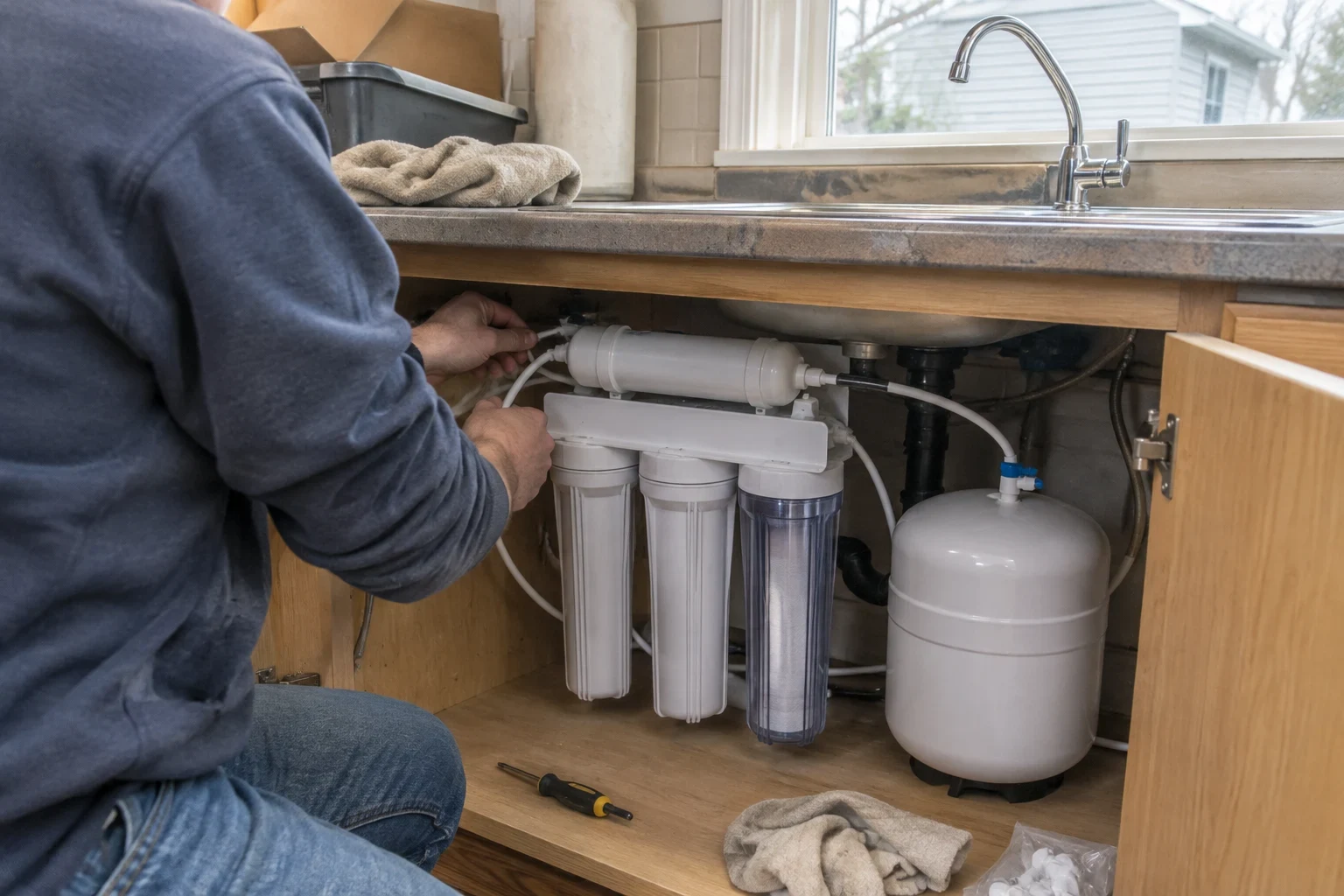
Reverse osmosis forces water through a thin-film composite membrane whose openings are fine enough to stop dissolved metals, salts and many trace contaminants. The purified water is held in a compact pressurized tank in the sink cabinet and flows to its own separate faucet. Whatever the membrane rejects is flushed to the drain.
Because it is point-of-use, it only treats the water coming out of that one tap. It is the right tool for drinking water, cooking, coffee, infant formula and ice. If the issue is chlorine smell in the shower or scale on fixtures, our whole-home filtration and water softeners pages describe better fits.
Racine's treated Lake Michigan water meets the standards it is held to. Most callers want something narrower: water that tastes clean, and less concern about what older pipes in the house might add on the way to the glass.
What Comes With an RO Install
- 01
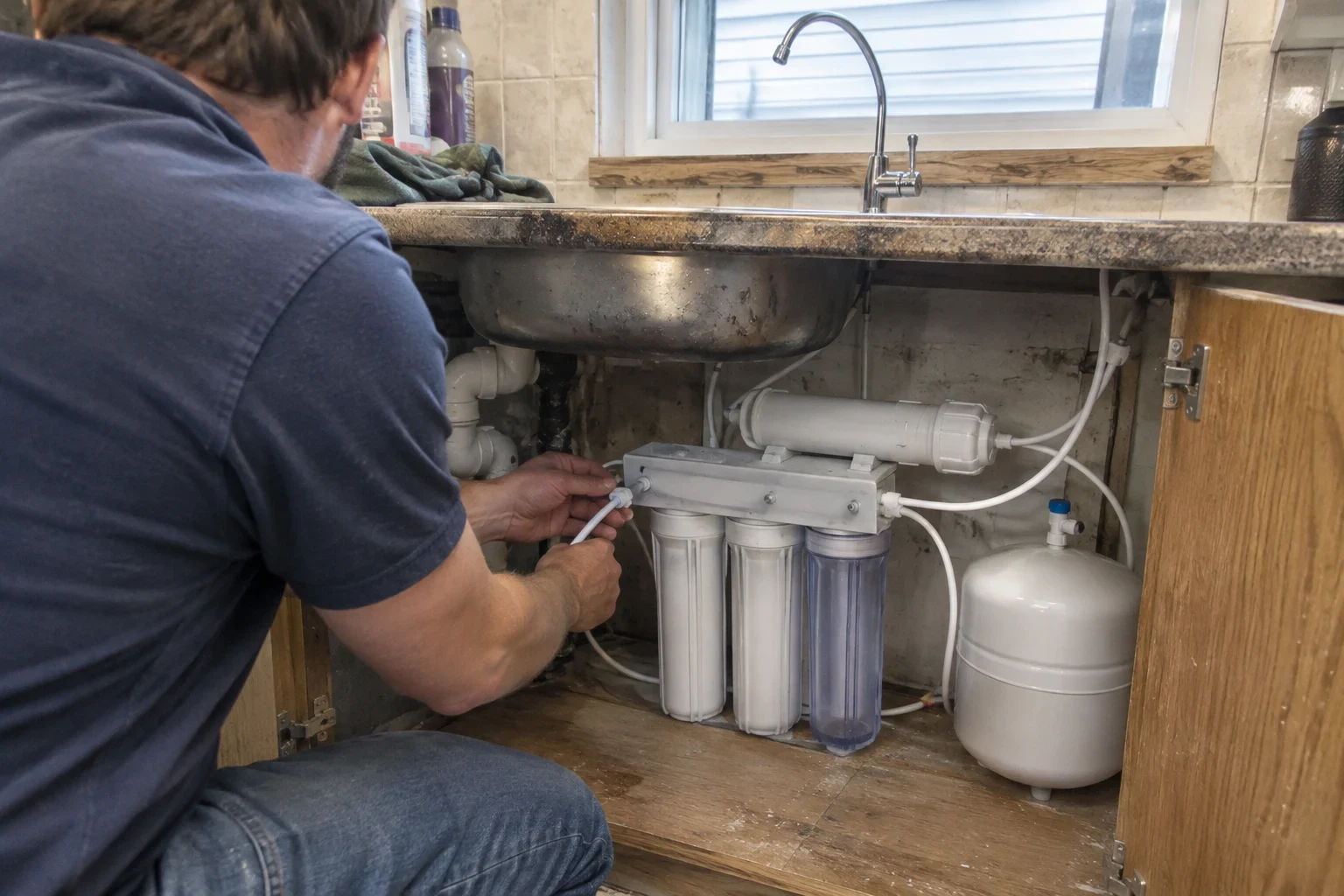
Sediment and carbon prefilters
The sediment cartridge traps rust flakes and grit. The carbon block pulls out chlorine first, since chlorine slowly degrades a thin-film composite membrane.
- 02
The membrane
This stage handles lead, nitrates and total dissolved solids. We match its gallons-per-day rating to what your household actually drinks and cooks with.
- 03
Pressurized storage tank
A bladder tank keeps treated water ready so the faucet pours at a useful rate. Before filling it we set the air precharge, because an underinflated bladder is what usually turns a strong RO stream into a weak one.
- 04
Dedicated faucet and drain line
The faucet goes in an unused sprayer hole, or we drill the sink deck or countertop. The concentrate line connects to the drain through a saddle clamp mounted above the trap.
- 05
Fridge or ice maker connection
Want filtered ice as well? We can tee a line from the system to your refrigerator, and we will say so if the distance or tank capacity makes that a weak fit.
Questions about Reverse Osmosis?
Call(262) 829-5983Signs an RO System Makes Sense
You buy bottled or jug water
If cases of water are always on the shopping list, an RO faucet usually takes their place and clears out the pantry space they fill.
Older plumbing in your home
Copper lines installed before lead solder was banned in 1986 may still have it at the joints. RO is one of the few under-sink methods that dependably cuts lead at the tap.
A pitcher filter isn't keeping up
Pitcher cartridges mainly improve chlorine taste. If you also want metals and dissolved solids brought down, a membrane is the step up.
Your coffee or tea tastes flat or off
Leftover chlorine and high dissolved solids both change how coffee and tea brew. Low-TDS water corrects that.
You're on a private well
Nitrates from farm fertilizer can reach rural wells, and RO reduces them well at the kitchen tap. Our well water treatment page covers the rest of the house.
How the Job Goes
- 1
Quote by phone
We ask about your sink, your water source and what you want to change. You get a written quote showing the system, the labor and what cartridges will cost each year.
- 2
Pressure and space check
The first thing we do on install day is read your incoming pressure. A membrane underperforms below roughly 40 psi, so a low number means a permeate pump or booster goes in before anything else.
- 3
Mounting the system
A feed valve goes onto the cold supply, then the filter housings and tank are mounted, the faucet is set and the drain saddle is connected. Plan on a couple of hours, with the sink cabinet cleared out.
- 4
Flush and walkthrough
We run the carbon fines and the first full tank to drain, then look over every joint for weeping. Before we leave, we show you the shutoff valve and which cartridge is due when.
What Moves the Price
We break your quote into equipment, labor and the yearly cartridge cost, so the full picture is on paper before you commit. Quotes hold for 30 days, and payment is due in full at the completion of the install. You have three business days to cancel after you sign. Financing is available through U.S. Bank Avvance, on approved credit.
- Stage count
- A basic four-stage system is the lower-cost option. Adding a remineralization or UV stage raises the price, so we recommend those only when your water or your goals give a reason.
- Incoming pressure
- Weak pressure means adding a permeate pump or an electric booster. Either one adds to the upfront cost, but they reduce reject water and keep the tank refilling at a steady rate.
- What we drill through
- A stainless sink takes a few minutes. Quartz and granite call for a diamond core bit, water cooling and more care around the edge.
- Additional runs
- Feeding a refrigerator, an ice maker or a second tap means more tubing, more fittings and more labor time. The cost climbs when the line has to pass under a finished floor or through cabinetry.
Reverse Osmosis Questions
How long do the cartridges last?
Plan on changing the sediment and carbon prefilters about once or twice a year. A busy kitchen that fills a lot of pots and bottles lands closer to twice. When those prefilters are kept fresh, the membrane behind them usually runs 2 to 5 years. Your quote lists the replacement schedule so the cost is a known line item, not a surprise.
How much water goes down the drain?
Every RO unit sends some concentrate to the drain, which keeps minerals from settling on the membrane surface. How much depends on your incoming pressure and the system design. Good pressure plus a permeate pump cuts that reject volume noticeably.
Does it strip out minerals my body needs?
It takes out most dissolved minerals, including calcium and magnesium. Food supplies far more of both than a glass of water ever does. If you prefer water with a little mineral taste, a remineralization cartridge adds a small amount back.
Can the unit go in the basement?
Yes, as long as the basement sits directly under the kitchen. Moving the tank and filter housings downstairs clears out the sink cabinet, and we run tubing up to the faucet. A longer run can lower the flow slightly, so we size the system with that distance in mind.
Should I add a softener first?
Only when your water needs it. Very hard water or iron can coat the membrane and wear it out early, and a softener installed ahead of the RO protects it in that case. If your water doesn't call for one, we will tell you.
Plan Your RO Install Before the Next Case of Bottled Water
Give us a rough picture of your kitchen sink and where your water comes from. We will build a written quote that shows the cartridge costs year by year, and you can ask about financing during the same conversation.