ServicesWater Softeners
Water Softener Installation in Racine
We size and install water softeners from your actual hardness and how much water your home uses. You get a written quote that holds for 30 days, so you can plan the upgrade on your schedule instead of waiting for scale to make the decision for you.
When a softener is the right fix
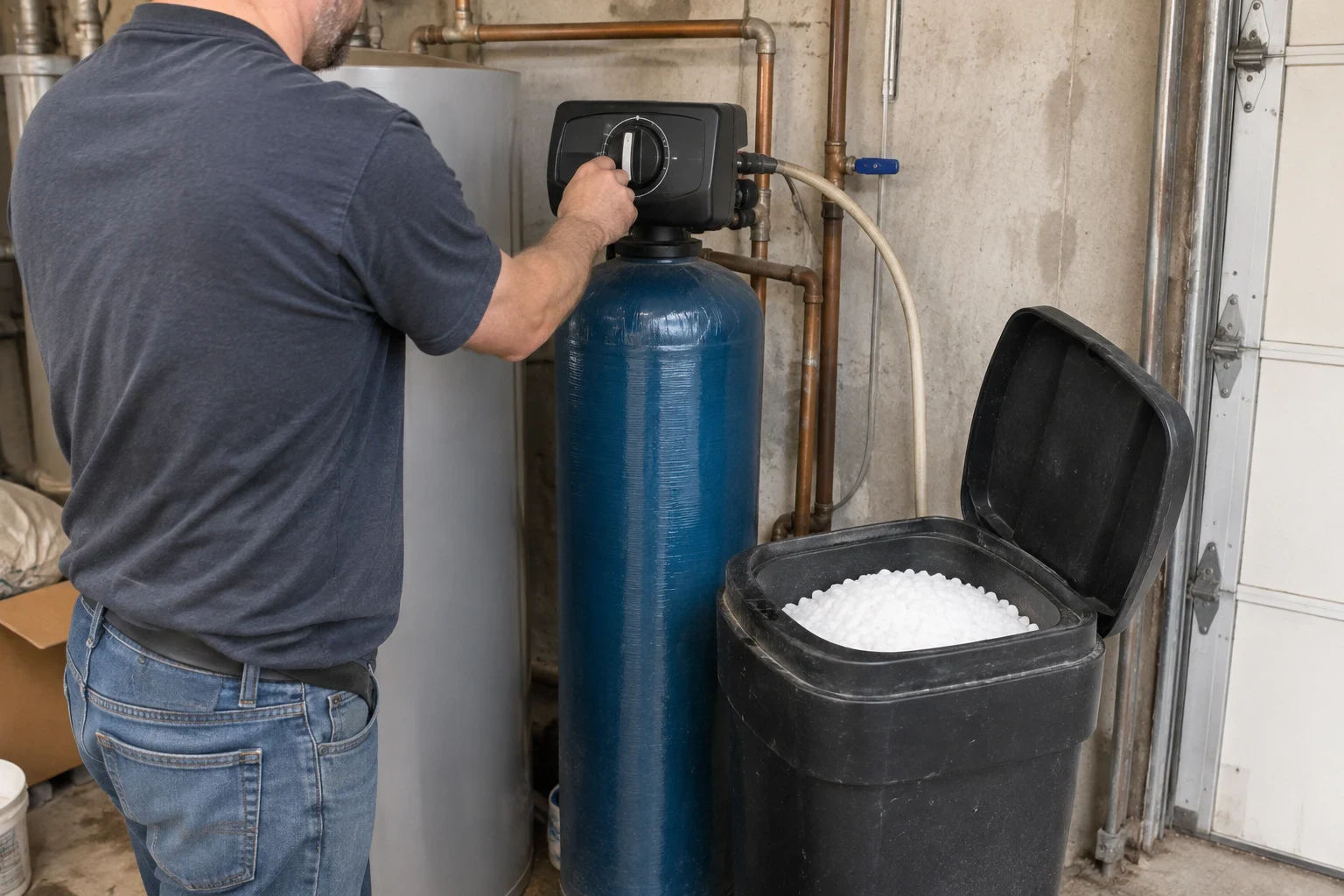
Calcium and magnesium in your water stay invisible until the water is heated or left to dry. Then they settle out as scale on water heater elements, inside faucet aerators, across shower glass and along the bottom of the tank. A softener runs your water down through a tank of resin beads charged with sodium or potassium. Calcium and magnesium hold to the resin more strongly, so they trade places with that charge and stay in the tank, and the water reaching your fixtures no longer leaves a deposit behind.
Softening solves one problem: hardness. It does nothing for chlorine taste or smell and is not built for most other contaminants. Whole-home filtration and reverse osmosis cover those, and we will point you to the one that matches your concern instead of stacking equipment you do not need.
Scale collects in a water heater a little at a time, and an aging softener usually loses capacity for years before it fails. Buying ahead of that point gives you time to compare equipment, arrange financing if you want it and choose an install date that works for your household.
What your softener install covers
Sizing by grain capacity
Your hardness in grains per gallon times your daily water use tells us how many grains the resin has to pull out between regenerations. Too small a tank cycles constantly and burns through salt. Too large a tank leaves resin sitting unused and lets water channel through the bed.
Metered control valve
We install a demand-initiated valve that counts gallons and regenerates only when the resin is close to spent. A fixed timer regenerates on the calendar whether you used the capacity or not, so metering saves salt and backwash water.
Bypass and plumbing tie-in
Every unit gets a bypass valve, so you can take the softener offline while water keeps flowing to the rest of your home. When the layout allows, we keep a cold line hard for the outdoor spigots.
Code-compliant drain line
Discharge from each regeneration goes to a floor drain or standpipe with an open air gap between the hose and the drain. That space gives wastewater no path to siphon back into the unit.
Brine tank setup and programming
We load salt into the brine tank, enter your hardness and salt dose on the valve and trigger a manual regeneration before leaving.
Old unit removal and cleanup
An existing softener gets disconnected and carried out, and the utility area is left the way it was when we arrived.
When it is time for a softener, or a replacement
Chalky buildup that keeps returning
The white residue on showerheads, aerators and the base of the tub spout is calcium carbonate. With high hardness it shows up again a few weeks after you scrub it off.
Popping sounds from the water heater
In a gas water heater, rumbling or popping usually comes from scale on the tank floor. Water caught beneath it boils into steam bubbles, and the layer slows heat transfer from the burner, so you pay for more fuel.
Cloudy glasses and scratchy laundry
Hardness minerals react with soap and leave a film on dishes and a rough, dull finish on towels. More detergent ends up doing less work.
Salt use with no results
When the salt keeps dropping but scale comes back, the resin may be exhausted or fouled, or the valve may be failing. A unit 10 to 15 years old deserves a replacement plan before it quits.
Crusted salt in the brine tank
A salt bridge is a hard shell with empty space below it, so the softener draws in plain water instead of brine. If it keeps forming, look at humidity, the type of salt or an aging system.
What happens from first call to startup
- 1
Call and scheduling
Describe what you are seeing at the faucets and around the water heater, and let us know if your home draws from the city supply or a private well. From there we set a time to look at your plumbing and prepare a free quote.
- 2
Walkthrough and written quote
On site we find where the main line comes in, locate the nearest drain and measure the space beside the water heater. We work from the hardness number in your utility's water report, or a recent lab result if you have a well. The written quote itemizes equipment, plumbing and removal, and the price stays good for 30 days.
- 3
Install day
With the main shut off, we cut the bypass and the softener into the line, route the discharge hose to the drain with its air gap in place and add salt to the brine tank. Most jobs wrap up in one visit, and your water is off for only a portion of it.
- 4
Startup and handoff
We program the valve, run a regeneration cycle and walk you through the bypass, the salt level and the settings. You pay once the install is finished, not in advance.
What moves the price of a softener
Two homes with the same softener can have different totals because the plumbing around it differs. Your quote breaks out each piece so you can see where the money goes and plan for it. Financing is available through U.S. Bank Avvance, on approved credit.
- Grain capacity
- Higher hardness and more people in the house call for a larger resin tank and brine tank. Correct sizing also keeps salt costs in check over the years.
- Valve type
- Metered valves with more programming options cost more up front than basic timer valves but use less salt and water.
- Plumbing changes
- Copper versus PEX, the distance to a drain, adding a separate hard-water line for outdoor spigots and tight utility rooms all change labor time.
- Removal and pretreatment
- Hauling out an old unit adds a little. Water with iron or high chlorine may need pretreatment first to protect the resin, which we cover under well water treatment and whole-home filtration.
Water softener questions
Something not covered here? (262) 829-5983
How much sodium does softened water add?
The amount rises with your hardness, and for most homes it is small. If you are watching sodium, the brine tank can run on potassium chloride instead of salt. Reverse osmosis at the kitchen sink also removes most of the sodium from the water you drink and cook with.
Why does my water feel slick after the install?
Without calcium and magnesium reacting with it, soap rinses away completely. That smooth feel is your skin without a soap film on it, not something the softener left behind. Many households find they can use less shampoo and detergent.
Will a softener take care of chlorine taste or iron stains?
No for chlorine. A softener can manage a small amount of dissolved iron, but higher levels coat the resin and cut its capacity over time. Chlorine is a job for whole-home filtration, and iron on a private well is handled with well water treatment installed ahead of the softener.
Can a new softener use my existing hookups?
In many cases, yes. If the current bypass and drain line are sound and the drain has a proper air gap, we keep them. If not, the quote spells out what has to change and the reason for it.
Is there a cancellation window once the agreement is signed?
There is. You get three business days to cancel after you sign. Before you sign at all, the quote holds for 30 days, so you have time to compare equipment and set a budget without feeling rushed.
How often will I need to add salt?
That depends on your hardness, how many people live in your home and how the regeneration is set. At handoff we show you how to check the level. A correctly sized metered unit goes through noticeably less salt than an oversized or timer-based one.
Plan your softener before scale plans it for you
Tell us about your home and your water, and we will put together a written quote that holds for 30 days. Ask about financing on the same call.