ServicesWhole-Home Filtration
Whole-Home Filtration in Racine
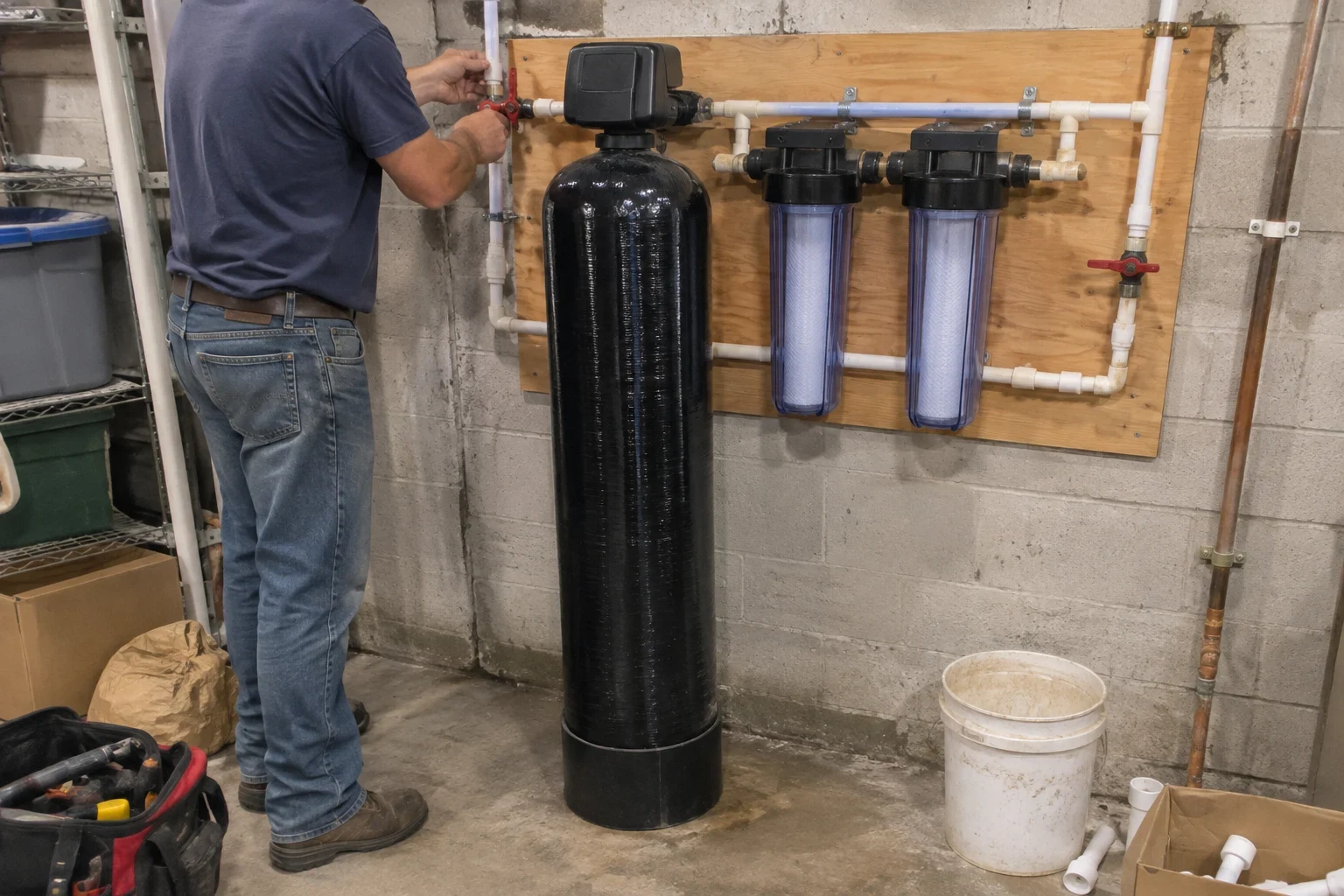
A whole-home filter treats water where it enters your home, so the shower, kitchen tap and washer all get water without the chlorine taste and smell. We size the carbon tank to your plumbing and spell out the media replacement schedule before you commit.
How point-of-entry carbon filtration works
This kind of system is called point-of-entry because it treats water the moment it comes into the house. We mount it on the main line, downstream of the meter and upstream of the water heater, so every fixture past that point draws filtered water. Inside the tank is a bed of activated or catalytic carbon. Water flowing through it gives up chlorine or chloramine, the disinfectants utilities use to protect water in the mains, plus many of the organic compounds that cause odd tastes and smells.
It is the right call when the complaint is flavor, odor or a chlorinated smell in the shower, and a filter on one faucet would leave the bathrooms, laundry and other taps untouched. Carbon does not soften water. Calcium and magnesium, the minerals behind crusty fixtures and spotted glasses, pass straight through, so see our Water Softeners page if scale is the issue. If you want drinking water taken a step further, reverse osmosis under the kitchen sink does that job, and plenty of homes have both.
We design every system with its maintenance in mind, not just install day. The carbon gets used up gradually, and the sediment cartridge needs swapping on a shorter cycle. Before you commit, you will know what each change involves and about when it comes due, so it is a line in your budget instead of an unexpected bill.
What goes into a whole-home install
- 01
Sediment prefilter
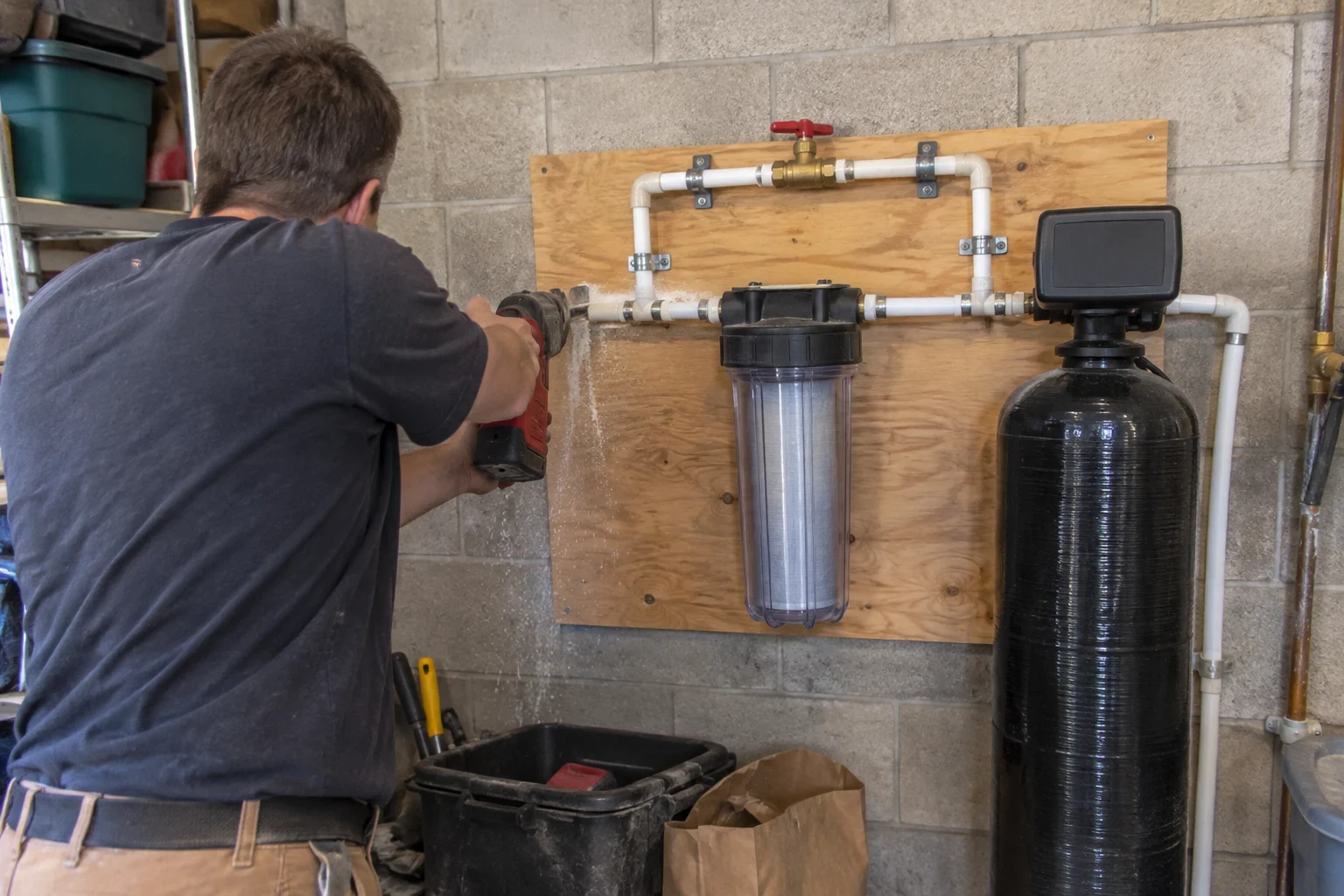
Upstream of the carbon, a cartridge in its own housing traps grit, loose scale and rust particles from the pipes. Stopping that debris early keeps it from clogging the carbon bed, which protects both your pressure and the life of the media.
- 02
Carbon matched to your disinfectant
Regular activated carbon does a good job on free chlorine. Chloramine is much slower to break down, so where it is present we use catalytic carbon, whose surface is treated to react with it.
- 03
A tank sized for real flow
Sizing starts with your peak demand: how many showers, faucets and appliances run at the same moment. Too small a bed lets water rush past before the carbon can act, and the upstairs shower loses pressure.
- 04
Bypass valve and shutoffs
We fit a bypass on every system. You can route water around the filter for a media change or a plumbing repair while the rest of the house keeps running.
- 05
Drain line when the design needs one
A backwashing tank needs a control valve, a drain line with an air gap and an outlet for power. An upflow tank that does not backwash needs none of those. We explain which one suits your space and the reason.
- 06
Correct order with a softener
When a softener is already in place or on your list, the carbon tank sits ahead of it. Chlorine wears down softener resin over time, so stripping it out first adds years to that equipment.
Questions about Whole-Home Filtration?
Call(262) 829-5983Signs a whole-home filter belongs on your list
The shower smells like a pool
Heat releases dissolved chlorine from the water as steam, so a small bathroom with the door shut fills with that pool smell fast. It is the plainest signal that a carbon filter at the main line will make a difference.
Coffee, tea and ice taste off
Chlorine reacts with the oils that give coffee and tea their flavor, and it freezes right into ice cubes. Drinks made from tap water that taste flat or chemical usually point to the disinfectant.
You keep buying pitcher cartridges
A pitcher or refrigerator filter only treats what you pour. If the chlorine is still noticeable in the shower and the laundry, a single filter on the main line reaches every tap.
Grit or rust flecks in aerators
Plenty of older Racine homes still run galvanized steel pipe, which flakes scale as it corrodes. When debris keeps clogging aerators and showerheads, a sediment prefilter should go in front of any other equipment.
A softener or RO system is in your plans
Putting in carbon at the same time means cutting into the main line once, scheduling one plumbing visit and getting the equipment in the correct order.
How the work runs from first call to startup
- 1
A free quote by phone
Tell us what you notice, how many bathrooms you have, where the main line enters and whether a softener is already in place. We give you a free quote and explain financing through U.S. Bank Avvance, on approved credit, if you want to spread the cost. The quote holds for 30 days, so you can pick a date that fits your schedule.
- 2
Cut-in at the main line
On install day we shut off the water at the main, cut in after the meter and mount the bypass, prefilter housing and tank. Joints are made to match your existing pipe, with proper transition fittings where copper, PEX or galvanized meet. We tell you up front how long the water will be off.
- 3
Media rinse and leak check
New carbon releases fine dust, so we flush the bed to drain until the water runs clear. Then we restore pressure and check every joint for weeps before we call it done.
- 4
Walkthrough and upkeep plan
We show you the bypass, how to swap the sediment cartridge and when the carbon will need replacing for your household's use. Payment is due in full when the install is complete, and you have three business days to cancel after you sign.
What sets the cost of a whole-home filter
Two things drive your price: what the media has to remove and how much plumbing it takes to get the tank on your main line. We walk through each line on the call, so you can weigh options and budget for the job well before you schedule it.
- Tank size and flow rate
- More bathrooms means more peak demand, and more demand needs a deeper carbon bed to keep contact time where it should be. A bigger tank costs more upfront but goes longer before the media is spent.
- Type of carbon
- Catalytic carbon has a treated surface that breaks down chloramine, and that extra processing makes it the more expensive media by volume. Standard activated carbon handles free chlorine at a lower cost. Your quote names the one your supply actually calls for, and we do not upgrade you without a reason.
- Access and pipe material
- The simplest job is an exposed main in an unfinished basement. Finished walls, a cramped utility room or galvanized pipe that needs transition fittings all add labor time.
- Drain and power
- Backwashing tanks have to discharge to a drain and plug into an outlet. When the closest drain or receptacle is across the basement, extending them raises the price, and that is often why we suggest an upflow tank instead.
- Ongoing cartridges and media
- Owning the system includes sediment cartridges and, eventually, a carbon change. We show you both costs up front so they are planned expenses, not surprises.
Whole-home filtration questions
How often does the carbon need replacing?
That depends on how much water your household uses, the size of the tank and whether your supply carries chlorine or chloramine. In a properly sized tank the carbon runs for years, while the sediment cartridge gets swapped far more often. We estimate both intervals for your home as part of the quote.
Will I notice lower pressure at the shower after the install?
You should not, as long as the tank matches your peak flow. A pressure drop after install nearly always comes back to one of two things: a carbon bed too small for the demand, or a sediment cartridge left in months past its change date. Sizing the tank correctly and keeping to the cartridge schedule holds pressure where it was before the filter went in.
Does it soften my water?
No. Carbon takes out chlorine and many taste and odor compounds, but calcium and magnesium pass right through. If scale is the problem, a water softener plumbed in after the carbon tank handles the hardness.
Will it take lead out of my drinking water?
We do not count on a whole-home carbon tank for lead. Lead typically enters from old service lines, solder or brass fittings inside the house, downstream of the filter. Reverse osmosis at the kitchen tap is the better choice for the water you drink and cook with.
My city water meets standards. Why filter it?
Safe and pleasant to drink are two separate measures. The disinfectant protects the water while it travels through miles of mains. Once it arrives at your home its work is finished, and taking it out improves the taste and smell at every fixture.
Put a whole-home filter on your calendar
Get a free quote and financing details on one call, then choose an install date that works for you. Your quote holds for 30 days.